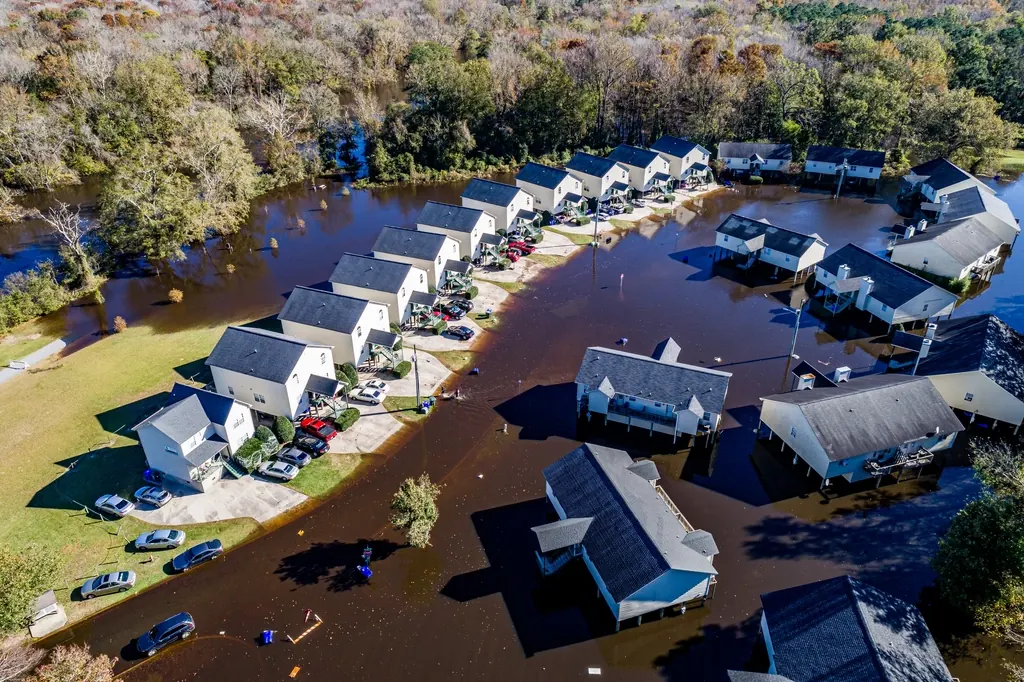
Kentucky has a long history with high water, from the 1937 Ohio River flood that reshaped Louisville and Paducah to the July 2022 floods that devastated communities across eastern Kentucky. Water damage is also the most common homeowners claim in quiet years, from burst supply lines and failed water heaters. The difference between flood and water damage decides which policy responds, what rules apply and whether appraisal can help.
Why the source of the water matters
Standard homeowners and most commercial property policies cover sudden and accidental water damage from inside the building, such as a pipe bursting or an appliance failing. They generally exclude flood, which policies commonly define as surface water, overflow of a body of water, mudflow and similar events affecting the ground outside. They also commonly exclude water that backs up through sewers or drains or seeps through foundations, unless you added an endorsement.
| Source of water | Usual policy response |
|---|---|
| Burst pipe, failed water heater, appliance leak | Homeowners or property policy, subject to its terms |
| Rain entering through storm-damaged roof | Homeowners policy, as part of the wind or hail loss |
| Rising creek or river, surface runoff | Flood policy, if you have one |
| Sewer or drain backup, sump overflow | Only with a water backup endorsement, up to its limit |
| Long-term seepage or slow leaks | Often excluded as wear, maintenance or repeated seepage |
Flood insurance in Kentucky
Most flood coverage for homes comes from the National Flood Insurance Program, written either directly or through private insurers under the program’s rules. Private flood policies also exist. NFIP policies are federal forms with their own conditions, including specific proof-of-loss requirements, limits on basement coverage and separate building and contents limits. They also contain an appraisal-type provision, but it operates under the NFIP form and federal rules rather than a typical homeowners appraisal clause, and its scope and deadlines differ. If you have an NFIP claim dispute, read the form carefully and consider speaking with an attorney familiar with federal flood claims.
After the July 2022 eastern Kentucky floods, many owners discovered they had no flood coverage at all, because flood insurance is not part of a homeowners policy and many properties outside mapped high-risk zones were never required to carry it.
Sewer backup and sump pump endorsements
Heavy rain can overwhelm municipal sewers in Louisville, Lexington and other cities, pushing water up through floor drains. Many Kentucky owners carry a water backup endorsement for this reason. These endorsements commonly have their own limit, sometimes much lower than the dwelling limit, and may carry a separate deductible. When the same storm causes both surface flooding and a sewer backup, sorting out which water caused which damage can become contentious.
Mixed-cause losses
Some losses involve more than one source of water. A tornado might tear off a roof and let in rain while a nearby creek floods the basement. A burst pipe might combine with groundwater. In those cases, insurers may pay one part under the homeowners policy and deny another as flood. The allocation between covered and excluded water is often the heart of the dispute.
Allocation is partly a coverage question and partly a factual one. Appraisers can often price each area of damage separately so the parties can apply coverage, but they generally do not decide whether an exclusion applies. When an insurer denies part of a loss as flood, talk to a Kentucky attorney about the coverage question.
Where appraisal reaches
Under a homeowners or commercial policy, appraisal can resolve disputes over the amount of a covered water loss, including:
- How far up the walls drywall and insulation must be removed.
- Whether flooring can be dried in place or must be replaced.
- Cabinet replacement and matching between rooms.
- Mitigation invoices, equipment days and drying logs.
- Contents pricing and depreciation.
Appraisal under a homeowners policy cannot add flood coverage that does not exist, and it cannot override a water backup endorsement limit. For NFIP claims, any appraisal right comes from the flood policy itself and follows its own rules.
Mitigation and mold
Water claims grow when drying is delayed. Most policies require reasonable steps to protect the property, and a drying company’s moisture maps and daily logs are some of the best evidence in any later dispute. Mold is a frequent friction point: many policies limit mold remediation to a modest sublimit or cover it only when it results from a covered water loss. Ask early how your policy treats mold so you are not surprised when the estimate arrives, and keep the remediation company’s scope and clearance testing results with your file.
Practical steps after a water loss
- Stop the water and start drying quickly; mold can begin within days.
- Photograph the source, the water line and every affected room.
- Keep the failed part, such as a supply line or water heater valve.
- Check every policy you have, including flood and any water backup endorsement.
- Get moisture readings and drying records from the mitigation company.
- Compare the insurer’s estimate with your contractor’s, line by line.
Our water damage appraisal page explains how we handle interior water disputes, and owners along the rivers can learn more on our Paducah and Pikeville pages. We are independent appraisers, not attorneys or public adjusters; if your issue is coverage, we will say so.