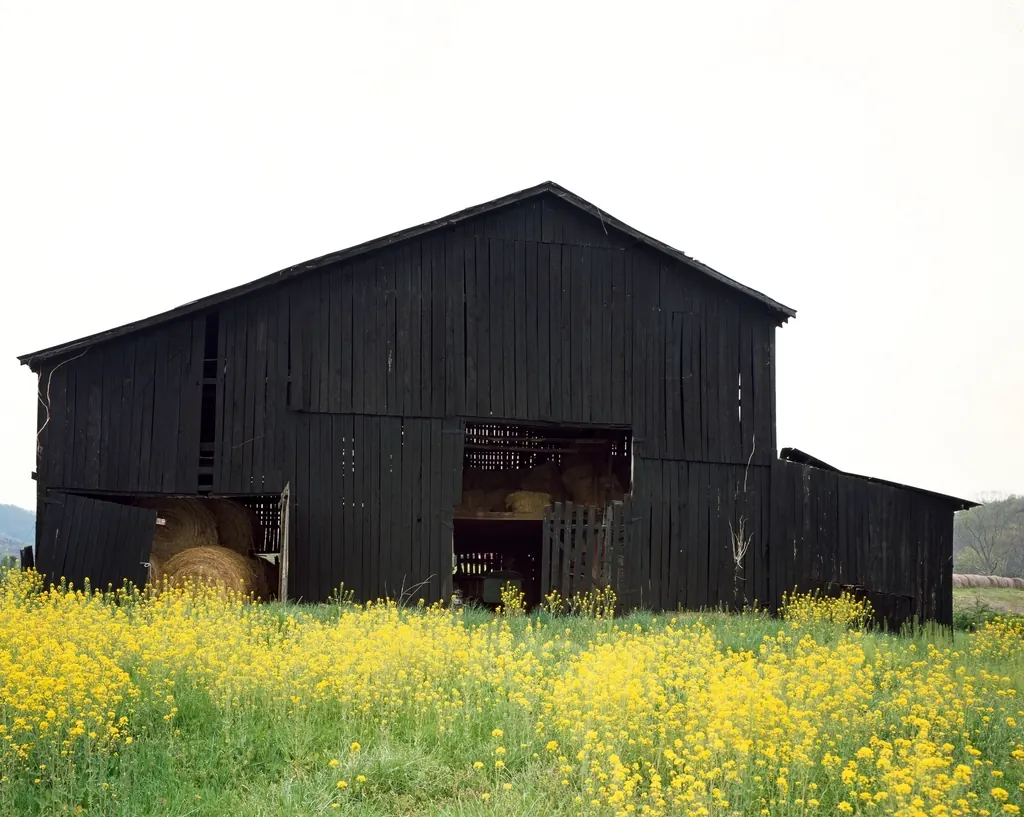
Kentucky farm property is its own category
Kentucky’s rural landscape is full of buildings that don’t fit a standard estimate: center-aisle horse barns with stalls, wash bays and tack rooms around Lexington, Paris and Versailles; tall air-cured tobacco barns with hinged ventilation boards; hay barns and equipment sheds; and post-frame pole barns on cattle and row-crop operations from the Jackson Purchase to the Cumberland Plateau. Tornadoes, straight-line winds, ice-laden trees, hail and lightning all hit these structures.
Policy forms shape the claim
Farm property is usually insured under a farmowners policy, a commercial agricultural form or a scheduled farm property endorsement. Coverage varies a great deal by form. Some barns are scheduled individually with their own limits; some outbuildings are covered on an actual cash value basis; fencing may be covered only for named perils or subject to a separate limit. Livestock, feed and equipment often have their own coverage sections. Before appraisal, we read the form with you so everyone understands which limits apply. Appraisal sets the amount of a covered loss, but it doesn’t change how the form defines coverage.
Where farm estimates go wrong
- Residential pricing on agricultural buildings: post-frame construction, large-span trusses and metal panel systems have their own costs.
- Equine-specific features: stall fronts, rubber mats, specialty flooring, waterers, wash racks and ventilation are easy to undervalue.
- Old barns: historic timber-frame or tobacco barns may need specialized labor and materials to repair.
- Fencing: board, woven wire and high-tensile fences are priced per linear foot with posts, gates and terrain all affecting cost.
- Access and logistics: remote sites and soft ground can add equipment and labor time.
Lightning deserves its own mention on farms. A strike can start a barn fire, damage electric fence chargers, wells and pumps, or travel through wiring into a shop or milking parlor. Where a fire has destroyed a barn, the question of rebuilding to the same footprint versus modern standards can become a large part of the dispute, depending on how the form values the building.
Actual cash value and depreciation on farm buildings
Many farm structures are older, and an actual cash value settlement can depreciate them heavily. When depreciation is applied unevenly or without regard to how the building was maintained, it becomes part of the amount-of-loss dispute. We document condition and use so the depreciation reflects the real building, not an assumption.
How we work farm and equine files
- Review the farm policy, schedules and any endorsements for each structure.
- Walk the property and inspect each damaged building, fence line and outbuilding.
- Prepare an estimate built around agricultural construction methods and local costs.
- Serve as your appraiser through negotiation and, if needed, the umpire stage.
Bluegrass owners can learn more about our coverage of the area on our Lexington page. Barn roofs damaged by hail are also discussed on our roof and hail appraisal page.
Questions about farm, barn & equine property appraisal
Does appraisal apply to farmowners policies?
Many farmowners and commercial agricultural policies include an appraisal provision similar to homeowners forms. Check your policy for the exact wording.
Can appraisal cover damaged fencing?
If fencing is covered under your form and the dispute is about the amount, it can be included. Some farm policies cover fencing only for certain perils or with separate limits.
Do you appraise livestock losses?
Our focus is buildings, fencing and structures. Livestock valuation is a specialized area, and we’ll tell you if another professional is better suited.