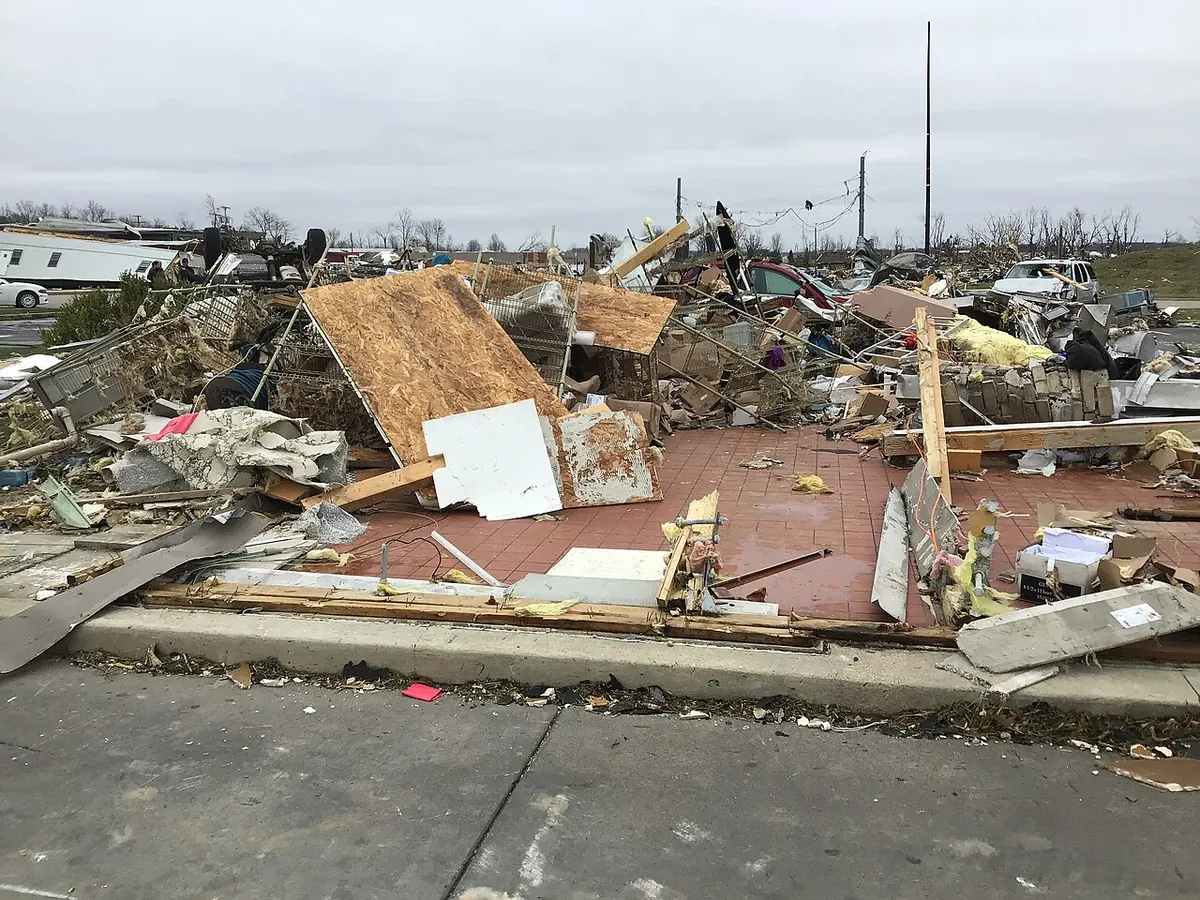
Kentucky’s wind history
Kentucky’s worst wind days are part of local memory. The April 3, 1974 Super Outbreak struck Brandenburg and parts of Louisville. In September 2008, the remnants of Hurricane Ike crossed the Ohio Valley as a powerful inland windstorm and knocked out power across the Louisville area for days. The December 10–11, 2021 tornadoes tore through Mayfield, Dawson Springs and Bowling Green, and a widespread high-wind event in March 2023 damaged roofs and trees across much of the state.
Kentucky is inland, so there is no hurricane landfall exposure and no coastal wind pool. Wind losses here are handled under ordinary homeowners and commercial policies, or through the Kentucky FAIR Plan for owners who can’t find coverage elsewhere.
Types of wind damage we see
- Tornadoes: concentrated, severe damage along a track, often including structural racking and debris impact.
- Straight-line winds and derechos: broad damage over large areas, frequently from falling trees and limbs.
- Remnant tropical systems: long-duration gusts that lift shingles, siding and soffit across whole neighborhoods.
What gets missed after a tornado
Major wind damage can be deceptive. The obvious items, such as roof covering and broken windows, make it into the first estimate. The less obvious ones often don’t: racked framing, shifted sill plates, cracked foundations, nail pops across interior drywall, damaged trusses, displaced brick ties and debris-driven punctures in siding. When a house has been twisted, the question of whether to repair or rebuild becomes the heart of the dispute. We document structural indicators and, when an engineer’s opinion is needed, we say so plainly.
Contents and additional living expenses also grow quickly after a tornado. Families displaced for months need temporary housing, and furniture, clothing and appliances may be damaged by wind, rain intrusion and debris. When those categories are covered and the dispute is about dollars, they can belong in the appraisal alongside the structure. We help organize the contents side so it is ready to compare item by item.
Debris, trees and code items
Wind claims frequently include tree removal and debris cleanup, which many policies limit separately. Our tree removal coverage calculator helps you see where those limits might land. Repairs may also trigger current building code requirements, and whether ordinance-or-law coverage pays for them depends on your policy.
How we approach a wind appraisal
- Review the policy, the deductible structure and every estimate issued so far.
- Inspect the full property, including attic, framing, interior finishes and outbuildings.
- Prepare a complete estimate covering structure, finishes, debris and contents where in scope.
- Negotiate with the insurer’s appraiser and present unresolved items to the umpire.
After a widespread event, contractors in the hardest-hit counties can be booked for months and prices often rise. An estimate written in the first week may not reflect what repairs really cost by the time crews are available. We price for the conditions you actually face, and we explain any surge in labor or material costs with support rather than guesswork.
Roof-only wind losses are also addressed on our roof and hail appraisal page. Owners in western Kentucky can find local details on our Paducah page.
Questions about tornado & wind damage appraisal
Does Kentucky have a wind pool like coastal states?
No. Kentucky has no state wind pool. Wind damage is covered under standard property policies or through the Kentucky FAIR Plan for hard-to-place risks.
Can appraisal decide whether my house should be rebuilt instead of repaired?
When the insurer accepts the wind loss, the repair-versus-rebuild cost is often part of the amount of loss and can be addressed in appraisal.
Is tree removal included in the appraisal?
If tree or debris removal is a covered item and the dispute is over the amount, it can be included, subject to the specific limits in your policy.