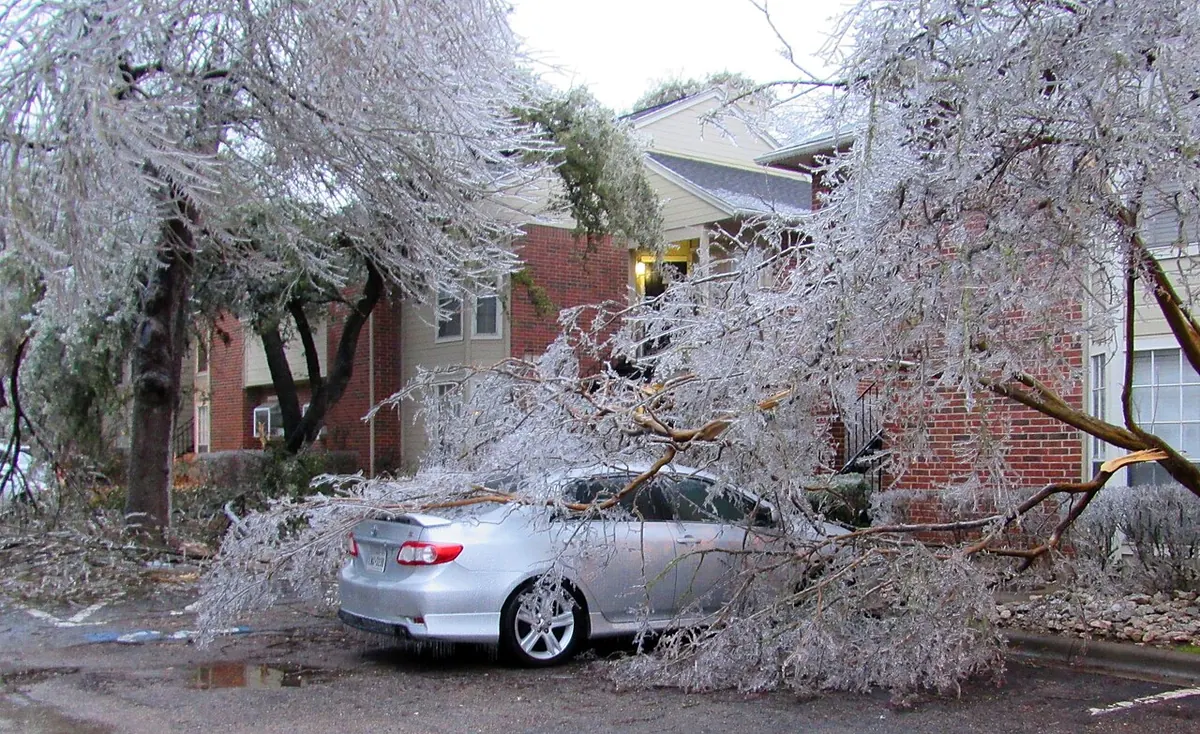
A Kentucky winter peril
Few states know ice the way Kentucky does. The February 2003 ice storm coated the Lexington area and left trees and power lines down across the Bluegrass. The January 2009 ice storm hit western Kentucky especially hard, bringing down trees across the Purchase and Pennyrile and leaving many communities without power for an extended period. These storms produce claims that look different from wind or hail losses, and they often arrive in bunches.
Ice-laden trees and limbs
The most common ice storm claim is a tree or heavy limb falling onto a house, garage, fence or vehicle. The structural repair is only part of it. Tree removal, debris haul-off and stump questions are frequently subject to their own limits, and those limits are policy-specific. Some policies pay to remove a tree only if it hits a covered structure; others cap removal per tree or per occurrence. Our tree removal coverage calculator helps you estimate what your policy may allow.
Ice storms also create damage that is easy to overlook in the first visit: gutters pulled loose by ice weight, crushed fencing, split decking, damaged service masts and shingles scraped by sliding limbs. Because so many claims are filed at once after a major ice event, early estimates can be brief. We go back through the whole property so these items are not left behind.
Ice dams and interior leaks
When snow and ice melt unevenly on a roof, water can back up behind an ice dam and work under shingles into ceilings and walls. The interior damage can be extensive and slow to appear. Estimate disputes often center on how much ceiling, insulation and wall finish needs replacing and whether roof underlayment was compromised.
Frozen and burst pipes
A deep cold snap can freeze supply lines in crawl spaces, exterior walls and unheated additions. When they thaw, the leak can run for hours. Vacant and seasonal properties carry extra risk: a lake cabin near Lake Cumberland, an inherited farmhouse, or a rental between tenants.
- Many policies require reasonable care to maintain heat or drain the system in unoccupied homes.
- Some reduce or exclude coverage after a property has been vacant for a stated period.
- These are coverage conditions, and appraisal does not decide them.
When coverage is accepted, the dispute moves to scope and price, which is where appraisal fits. Water-specific issues are covered in more depth on our water damage appraisal page.
Our approach to ice and freeze claims
- Confirm how the policy treats tree removal, debris and freeze-related water.
- Inspect roof, attic, framing and interior finishes for impact and water damage.
- Estimate structural repair, interior repair and covered removal costs separately.
- Serve as your appraiser and negotiate the amount with the insurer’s appraiser.
Owners near the 2009 storm zone can find regional details on our Hopkinsville page.
Questions about ice storm & freeze damage appraisal
Does my policy pay to remove a tree that fell in the ice storm?
It depends on the policy. Many pay for removal only when the tree damages a covered structure, and most cap the amount, so check your specific limits.
My vacant rental’s pipes burst. Can appraisal help?
If the insurer accepts coverage, appraisal can address the amount. If it raises vacancy or heat-maintenance conditions, that is a coverage issue for a Kentucky attorney.
Are ice dam leaks covered?
Many policies cover sudden interior water damage from ice dams, though some limit roof repairs. Your policy language and the facts of the loss control.